 EV Charger Installation
Home EV Charger Installation
A home charger is the most common EV install, and the one that changes daily life the most. Instead of hunting for a public station, you plug in when you park and leave with a full battery. The electrician runs a dedicated 240-volt circuit from your panel to the garage or driveway and mounts a Level 2 charger or a heavy-duty outlet.
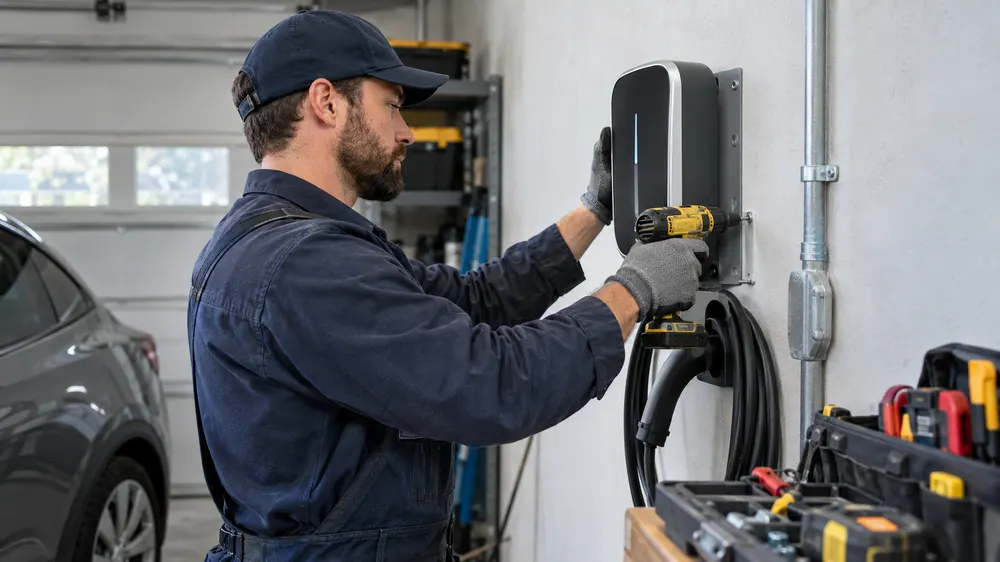
What a home EV charger install includes
A proper home install follows the same arc whether the job is simple or involved. It starts with a look at your electrical panel: the electrician notes the service size, usually 100, 150 or 200 amps, checks for open breaker slots and runs a load calculation to see what the home can spare. From there the new circuit is planned: breaker size, wire gauge and the route from the panel to the parking spot. On install day the power to that circuit is shut off, the breaker goes in, the wire is pulled through conduit or finished walls, and the charger is mounted, connected and configured. If it is a smart charger, it joins your Wi-Fi and any scheduling is set up. The final step is the inspection, where a city or county inspector verifies the work against the electrical code.
The parts you end up with are modest: a breaker, a run of copper wire, the charger or outlet, and proper labeling at the panel. The value is in the sizing and the workmanship, because a charging circuit pulls heavy current for hours at a stretch, night after night.
Where the charger goes
The best spot is the one that makes plugging in automatic. In an attached garage that is usually the wall nearest the car's charge port, close enough that the cable drapes without crossing a walkway. Exterior walls work well too: a weather-rated charger by the driveway serves homes without garages, and it is also the answer when the garage is full of everything except the car. For parking pads away from the house, a pedestal mount brings the charger to the car, with conduit trenched underground from the panel. Detached garages often justify a small subpanel, which makes the charger circuit and any future garage circuits cleaner to serve.
Cable reach settles a lot of arguments. Most chargers ship with 18 to 25 foot cables, and mounting the unit so the cable reaches either side of the car saves daily annoyance. If a second EV is plausible in the next few years, say so now: centering the charger between two spots, or running slightly heavier wire for a future second unit, costs little at this stage.
How long it all takes
The install itself is usually the fastest part. A straightforward job takes a few hours; a long wire run or a panel upgrade stretches it to a day or two. The calendar time lives around the work: getting the estimate scheduled, the permit issued, and the inspection booked. In many cities the whole arc from first call to charging car runs one to three weeks. Starting before the vehicle arrives is the single best way to make the process feel quick.
What it tends to cost
Many straightforward home installs fall between about $800 and $2,500 including the charger. Short wire runs near the panel sit at the low end; long runs, trenching, drywall work or panel upgrades move the total up. Labor rates vary by market. Treat these as rough figures for planning, and let the written estimate from the electrician who has seen your panel be the real number.
Common home scenarios
Panel in the garage. The easiest case and the cheapest. The charger mounts within a few feet of the panel, the run is short, and the job is often done before lunch.
Panel in the basement. Common in older and two-story homes. The wire comes up through finished space, which adds labor and sometimes minor drywall patching. Still a one-day job in most houses.
Driveway or carport parking. An exterior-rated charger on the house wall, or a pedestal by the parking space, handles it. Conduit and fittings are weather-rated, and GFCI protection is part of the code for outdoor circuits.
Older service. A 100 amp panel does not end the conversation. A right-sized circuit, often 32 amps, or a load management device usually makes charging work without a full service upgrade.
Working with an independent electrician
evchargerinstallation.org is a referral service, not a contractor. When you call, we connect you with an independent electrician who serves your area and handles home EV charger installation regularly. The contractor inspects your setup, provides a written estimate, pulls the permit where required, completes the work and stands behind it. You pay the contractor directly at a price they set, and the written estimate is the number to rely on. Our role is the first step: making sure one phone call reaches someone local and experienced.
What to have ready when you call
A few details make the first conversation productive. Your ZIP code routes the call. Your vehicle's make and model determines the charging rate the circuit should target. Where you park, garage, driveway or shared lot, shapes the install type. If you know your panel's main breaker size, usually stamped 100, 150 or 200, mention it; a photo of the open panel sent later helps the electrician quote accurately. And if you have a deadline, like a vehicle delivery date, say so up front.
Common questions
Are the contractors independent?
Yes. Every electrician we refer runs an independent business. They set their own pricing, carry their own insurance and are solely responsible for their work.
Do cost figures here apply to my home?
They are rough planning ranges drawn from typical jobs. Your home's panel, wire run and local labor market decide the real number, which is why every estimate here is followed by the same advice: get it in writing from the electrician who sees your panel.
Is the federal tax credit still available?
No. The Section 30C credit for home charging equipment ended for property placed in service after June 30, 2026. State, local and utility programs may still apply and are listed on each state page.
How fast can someone come out?
Scheduling varies by market and season. In most areas an estimate visit happens within days, and the work itself within one to three weeks including permits. Vehicle delivery dates are worth mentioning when you call.
The job, step by step
Knowing the sequence removes most of the anxiety from any electrical project. It begins with the estimate visit or photo review, where the electrician examines the panel, confirms capacity with a load calculation, measures the wire route and talks through equipment options. The written estimate follows, listing the circuit size, materials, equipment, permit fees and labor so the scope is unmistakable. Once you approve, the contractor pulls the permit and schedules the work.
Install day starts with the power to the work area shut off and locked out. The new breaker lands in the panel, wire is pulled along the planned route through conduit or finished framing, and the equipment is mounted, connected and configured. Smart units join your Wi-Fi and get their scheduling set. The electrician then tests the circuit under load, verifies voltage and polarity, labels the panel and walks you through operation and basic care. The inspection closes the loop on the city or county's schedule, usually within days, and the documented, permitted circuit becomes part of the house.
After the work, a few habits protect the investment. Keep the permit record and the invoice with your home documents; insurers and future buyers both ask for them. Register the charger with the manufacturer for warranty coverage. Check the unit monthly for damage or error lights, and set the charging schedule to match your utility's cheapest hours if a time-of-use plan is available. That is the whole ownership routine for a device that will likely outlast the car it charges.
Planning checklist
Before the first call, a short list keeps everything moving. Confirm where the vehicle will park most nights and measure the rough distance to the electrical panel. Note the panel's main breaker size and whether open slots are visible. Check your utility's website for EV rates and charger rebates, since some programs require approval before installation. If you rent or answer to an association, review the approval process early, because it usually takes longer than the electrical work. Think about whether a second EV is likely in the next few years, since planning for it now is nearly free. Finally, decide on a rough budget and remember that cost figures on this site are planning ranges, not quotes.
When the electrician visits, three questions are always worth asking: what does the load calculation say, what would change the price, and is there anything you would do differently if this were your house. The answers tend to be short, specific and genuinely useful.
One call, nationwide
This site serves more than 28,000 cities across all 50 states and the District of Columbia, and the process is the same everywhere: call the number at the top of this page, share your ZIP and your vehicle, and get connected with an independent electrician in your area who handles home EV charger installation. Availability varies by location, and the agent who answers will tell you straight whether there is an installer near you. In most metro and suburban areas the answer is yes, often with same-week estimate visits.
If you are still in the research stage, the state pages here collect the incentives, utility programs, registration fees and electricity rates that shape what charging costs where you live, and the city pages add local detail on housing stock and permits. When research turns into a decision, the phone number is on every page.
The bottom line
Most home EV charger installation questions resolve into a short list: get the panel checked, get the scope in writing, pull the permit, and hire someone licensed who does this work every week. The technology is proven, the process is routine for a good electrician, and the result is the part of EV ownership people actually notice, a car that is always ready. When you are ready to move from reading to doing, call the number at the top of the page and we will connect you with an independent electrician near you.
Who a home install is for
Any driver who parks at home overnight is a good fit. A typical commuter drives 30 to 40 miles a day, and a few hours on a Level 2 circuit replaces that easily, so most owners never need to charge anywhere else during the week.
Homes with an attached garage and a panel nearby are the simplest case. Detached garages, driveways and homes with the panel on the far side of the house are still doable. They just need more wire, and sometimes trenching.
What the electrician checks first
Before quoting, a good electrician looks at your panel: its amp rating, how many breaker spaces are open and what the existing loads are. A load calculation shows whether a new 40 or 50 amp circuit fits. Electric dryers, ranges, heat pumps and hot tubs all count.
Next comes the route. The electrician measures the run from the panel to the charger location and notes walls, ceilings, crawl spaces or concrete in the way. Long runs and finished walls drive labor, while the charger itself is a smaller part of the bill.
Choosing a charger
Match the charger to your car, not the other way around. Most EVs accept 32 to 48 amps at home. A 40 amp circuit feeding a 32 amp charger is a common and sensible setup. Higher output only helps if the car can accept it.
Look for a unit listed by a recognized testing lab, weather rating if it goes outdoors, a cable long enough to reach the charge port from where you park, and optional smart features such as scheduling for off-peak electric rates.
FAQ
How long does a home install take?
Most straightforward installs take a few hours. Longer wire runs, finished walls or a panel upgrade can turn it into a full day or more.
Do I need a permit?
Most areas require an electrical permit for a new 240-volt circuit. The installing electrician normally handles the permit and the inspection.
Can I use a regular outlet?
A standard 120-volt outlet works for Level 1 charging, which adds only a few miles of range per hour. Most drivers want a 240-volt circuit.
Should I hardwire or use a plug?
Hardwired chargers look cleaner and usually carry a higher weather rating. A plug-in setup on a NEMA 14-50 outlet lets you swap the charger without an electrician.
Will it raise my electric bill?
You will use more electricity, but usually less than you spend on gas. Many utilities offer off-peak rates that make overnight charging cheaper.